A rental contract, some terms of service, a freelance agreement… most of us sign them without fully understanding because legal language is intimidating. AI has become a great translator from “legalese” into plain language: it explains what each clause says and flags what’s worth a closer look. That said, there’s an important line to make clear from the start. This is not legal advice: AI helps you understand, it doesn’t replace a lawyer.
What AI is great at with a contract
- Translating the language: “explain this clause like I’m 15” turns indecipherable paragraphs into something you get.
- Summarising the essentials: each party’s obligations, deadlines, penalties and how the agreement ends, in a clear list.
- Spotting points to watch: lock-in clauses, automatic renewal, high penalties or unusual conditions you might have missed.
- Preparing questions: it helps you reach the other party (or your lawyer) with the right, already-organised questions.
How to use it well (step by step)
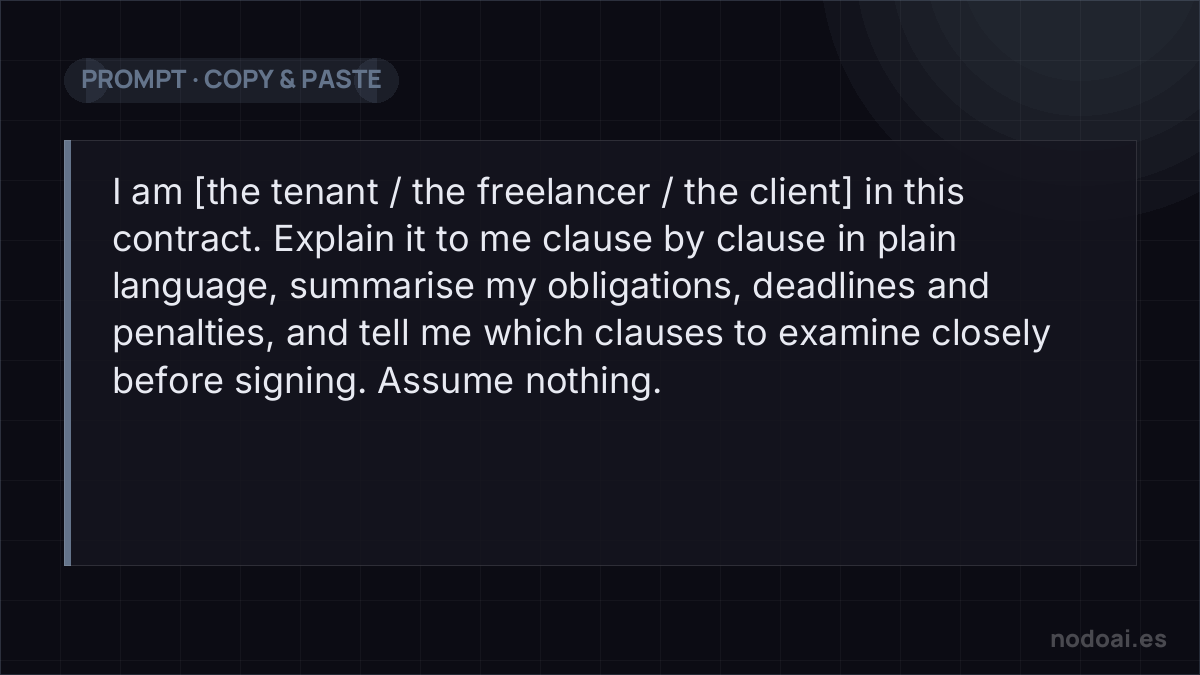
- 1. Give the context: “I’m the tenant / the freelancer / the client, I want to understand what binds me and what risks I have”.
- 2. Ask for a clause-by-clause explanation and a final summary of “what I should look at most”.
- 3. Follow up: “what happens if I want to cancel early?”, “is this normal in this kind of contract?”.
- 4. Verify what matters: for what you truly have at stake, validate with a professional. AI prepares the conversation; it doesn’t replace it.
The red lines (read before uploading anything)
- It’s not legal advice: AI can misinterpret terms, ignore your country’s rules or give you false confidence. For decisions with money or serious consequences, a lawyer.
- Careful with sensitive data: a contract carries names, addresses, figures. Don’t upload confidential documents to tools where you don’t control what happens with that information; review how to protect your data with AI and anonymise if needed.
- The law is local: what’s valid in one country isn’t in another. If the AI doesn’t know your jurisdiction, its explanations may not apply to you.
Reading a contract with AI: a smart first pass, not a lawyer
AI is genuinely useful for understanding a contract before you sign — as a first pass, not a verdict:
- Ask it to summarise in plain language, flag unusual clauses, and list your obligations and the deadlines.
- Have it surface the risky bits: auto-renewal, penalties, who can cancel and how.
- Turn it into questions to ask the other party or a lawyer.
This does not replace legal advice. AI can misread jurisdiction-specific terms and miss what isn't written. For anything with real money or liability, use AI to walk in informed — then have a qualified professional review what actually binds you.
Our recommendation
- Use it as a first filter, not a verdict: it’s perfect for understanding and spotting red flags, and for stopping you signing things blind.
- Verify the critical points: deadlines, penalties and exit clauses are exactly where a misreading gets expensive. Confirm them.
- Our take: AI democratises “understanding before signing”, which is already huge. But understanding isn’t the same as being advised: for the important stuff, a professional is still worth it.
Frequently asked questions
Can I trust what AI tells me about a contract?
For understanding the general meaning and forming questions, yes, it’s very useful. For deciding whether to sign something with serious legal or financial consequences, no: it can be wrong and doesn’t know your full situation. Treat it as a first read, not a ruling.
Is it safe to upload my contract to an AI?
It depends on the tool and how sensitive the document is. Avoid uploading confidential data to services where you don’t know how it’s handled; when it’s delicate, anonymise names and figures or consult a professional directly.
Conclusion
AI is a great ally for never signing without understanding again: it translates the “legalese”, summarises the key points and warns you what to check. But remember the rule: understanding yes, advice no —for the serious stuff, a lawyer. Before uploading documents, review how to protect your information with AI; and if your problem is the opposite, reviewing lots of paperwork, see how to extract data from documents with AI.