
AI for personal finance means using intelligent algorithms to automate budgeting, track spending, and optimize investments. In this article you’ll discover how everyday users can turn raw transaction data into actionable insights, pick the right AI‑driven tools for savings goals, and let machine‑learning models keep an eye on credit health. Expect concrete numbers, real‑world app examples, and a quick‑reference table that makes the choice between platforms crystal clear.
Índice
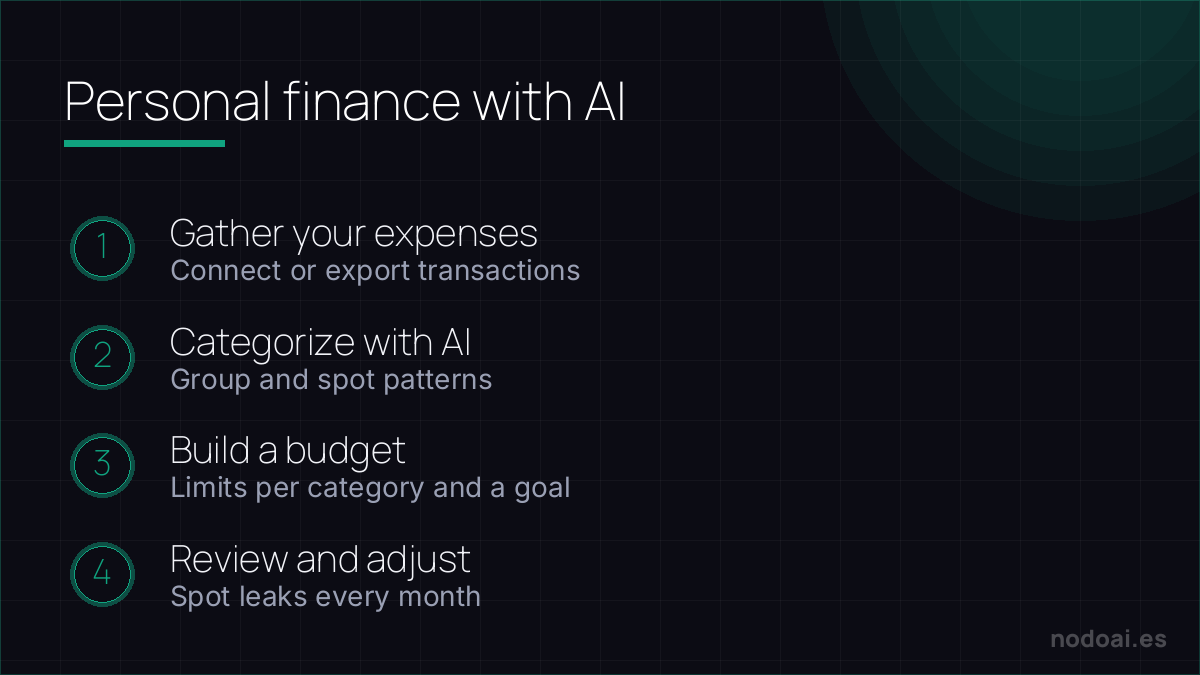
Smart Budgeting with AI
AI‑enhanced budgeting apps read your bank feeds, categorize expenses, and suggest adjustments in near‑real time. Mint, for instance, flags recurring subscriptions that have risen by more than 10 % and proposes cheaper alternatives, while PocketGuard highlights “in‑budget” cash after accounting for upcoming bills. The result? Users typically shave 5‑15 % off discretionary spend within the first three months.
Beyond the headline numbers, these tools embed habit‑forming nudges. Cleo, a chatbot that lives in WhatsApp, asks “Did you remember your coffee limit today?” and rewards consistent behavior with playful emojis. The same principle applies to YNAB’s “Give Every Dollar a Job” philosophy, now powered by predictive forecasts that anticipate payday inflows and adjust envelope sizes automatically.
- Automated categorisation – AI learns your merchant patterns, reducing manual tagging.
- Spending alerts – Real‑time push notifications prevent overspend before it happens.
- Goal‑driven forecasts – Simulations show how a €200 monthly cut‑back shortens a €5,000 vacation plan by six months.
By letting the algorithm do the heavy lifting, you reclaim the mental bandwidth usually spent scrolling through spreadsheets.
AI‑Powered Investment Advisors
Robo‑advisors have moved past simple index‑fund rebalancing; today they incorporate tax‑loss harvesting, risk‑parity models, and even ESG scoring. Betterment’s “Smart Saver” feature predicts the optimal monthly contribution based on cash‑flow volatility, while Wealthfront’s “Path” visualises how a 2 % salary increase reshapes your retirement horizon. These platforms continuously retrain on market data, ensuring the portfolio adapts without you lifting a finger.
Below is a quick comparison of the most popular AI‑driven advisors for individual investors:
| Tool | Core AI Feature | Pricing (annual) | Integration |
|---|---|---|---|
| Betterment | Dynamic rebalancing & tax‑loss harvesting | 0.25 % of assets | Syncs with most U.S. banks, PayPal |
| Wealthfront | Risk‑parity allocation + Path planner | 0.25 % of assets | Direct deposit, employer 401(k) rollover |
| M1 Finance | Fractional shares + algorithmic pie building | Free‑tier; 0.25 % premium | Brokerage accounts, crypto (US) |
| Personal Capital | AI‑guided retirement check‑ups | Free; advisory 0.89 % | Links to 14,000+ financial institutions |
The table shows that while all four charge similar fees, the depth of AI integration varies. Betterment and Wealthfront excel at tax efficiency, whereas M1 Finance shines for DIY pie creation with algorithmic suggestions. If you need a holistic view of all accounts, Personal Capital’s dashboard pairs AI insights with a free net‑worth tracker.
Choosing the right advisor hinges on your priorities: tax optimisation, hands‑off growth, or granular control over individual holdings. Most platforms also offer a free trial, letting you test the AI’s recommendation quality before committing.

Risk Management & Credit Insight
AI now monitors credit‑score fluctuations the moment a new inquiry appears, offering remediation steps before a lender even asks for a report. Credit Karma’s “Score Simulator” runs a Monte‑Carlo model to estimate how paying down a €1,000 credit‑card balance could boost your FICO by 12 points. Simultaneously, Upstart leverages non‑traditional data—like education and employment history—to price personal loans for borrowers who would otherwise be declined by legacy banks.
Prompt‑Engineered Alerts
When you integrate a personal‑finance chatbot, you can fine‑tune prompts to surface the most relevant alerts. A well‑crafted prompt such as “Summarise any upcoming bills over €100 and suggest a payment schedule that maximises cash‑flow” lets the model deliver concise, actionable advice. For a deeper dive into prompt design, see our guide on what is prompt engineering.
AI also flags anomalies that signal fraud. Descartes Labs’ anomaly‑detection engine analyses transaction velocity, location, and merchant type, automatically locking a card if the probability of fraud exceeds 95 %. Users receive an instant SMS and a one‑click re‑activation link, cutting potential loss by an estimated €1,200 per incident in Europe’s 2023 report.
- Real‑time credit monitoring – Immediate insights on score impact.
- Fraud detection – Machine‑learning models catch irregular spend patterns faster than traditional rule‑sets.
- Loan eligibility forecasting – AI predicts approval odds, helping you adjust applications proactively.
By embedding these AI layers into everyday banking, you transform reactive budgeting into a proactive financial health strategy.
Common Pitfalls to Avoid
Many users dive into AI‑driven finance tools without a clear data‑privacy plan, assuming the service will automatically safeguard every detail. In reality, most platforms store transaction metadata on cloud servers, and a weak password can expose the entire ledger to breach.
To prevent this, enable two‑factor authentication, regularly export encrypted backups, and review the provider’s GDPR compliance certificate before linking any account.
Our take: AI for personal finance, with a level head
- Where it does help: organising expenses, understanding concepts, building a budget and asking yourself questions (“where is my money going?”). As a copilot to get organised, it works well.
- What to watch: don’t give sensitive bank data to just any tool, and verify the numbers. A wrong subtraction in your budget is paid by you.
- What it isn’t: an advisor who knows your specific situation.
This is not personalised financial advice. Use it to get organised and learn; for important decisions (debt, investing, a mortgage), check with a professional. The calculator helps, but the decision is yours.
Frequently Asked Questions About ai for personal finance
How accurate are AI‑generated budgeting forecasts?
AI models analyse historic spend, seasonal patterns, and upcoming calendar events to project cash‑flow with typically 80‑90 % accuracy for recurring expenses. The prediction improves as the system ingests more transactions, especially when you categorize irregular purchases like travel or gifts.
Add a manual adjustment for one‑off income to fine‑tune each month.
Can AI replace a human financial advisor?
AI excels at processing large data sets, flagging anomalies, and generating scenario analyses faster than any person could. However, it lacks the nuanced understanding of personal values, risk tolerance, and life goals that a seasoned advisor brings to strategic planning.
Use AI as a research assistant, not a sole decision‑maker.
What are the hidden costs of AI finance apps?
Many platforms advertise free budgeting features but charge subscription fees for premium insights, such as real‑time credit‑score monitoring or custom investment recommendations. Additionally, data‑export limits, API calls, and premium support often require separate purchases, turning a low‑cost starter into a mid‑range expense.
Review the pricing table before linking your accounts.
How does AI handle multiple currencies and exchange rates?
Modern finance bots integrate live FX feeds from providers like Open Exchange Rates, automatically converting transactions into your base currency for unified reporting. The engine applies the spot rate at the transaction timestamp, ensuring that historical analyses reflect true purchasing power.
Enable multi‑currency mode in settings to activate this feature.
Is my personal data safe when using AI budgeting tools?
Reputable services encrypt data in transit and at rest, comply with GDPR, and undergo regular third‑party security audits. Nonetheless, any cloud‑based solution carries residual risk, so you should limit access to essential accounts and periodically delete archived records you no longer need.
Choose providers with transparent privacy policies and opt‑out options.
Conclusion
Integrating AI into your personal finance routine can unlock efficiency, early warnings, and smarter spending habits, provided you stay mindful of privacy and cost considerations. Start with a single use‑case—like automated bill reminders—then expand as confidence grows. This incremental approach lets you measure value while keeping risk low.
- Enable two‑factor authentication on every finance app.
- Set a monthly budget review using an AI‑powered chatbot.
- Export and encrypt your transaction history quarterly.
- Compare subscription tiers before committing to premium AI features.
For deeper prompt‑design tactics, see our guide on what is prompt engineering.