Competitor prices, job postings, product reviews, real estate listings… The web is full of useful data trapped in pages. Extracting it by hand is slavery; coding a scraper used to be developer territory. In 2026, AI has opened a third way: describe what you want and let the machine structure it. Here’s how to do it without coding — and, just as important, the legal and ethical limits.
The simplest route: copy and structure with AI
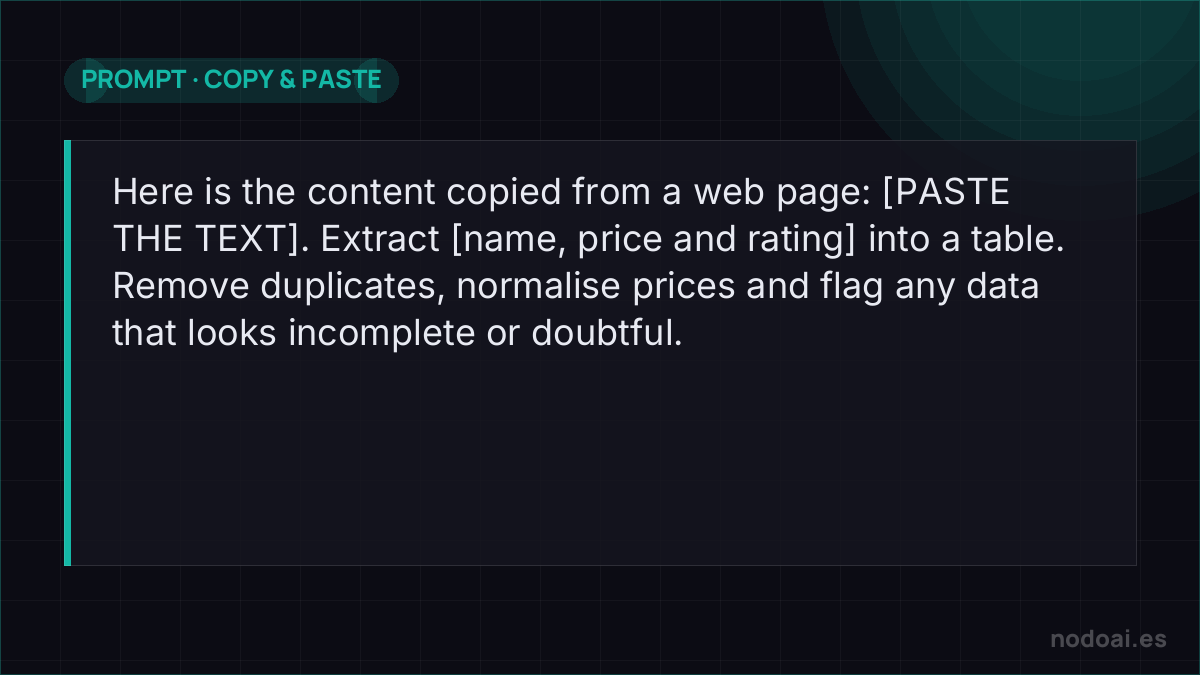
- The trick almost nobody uses: select and copy the page content (Ctrl+A, Ctrl+C), paste it into ChatGPT or Claude and ask “extract name, price and rating into a table”. The AI does the dirty structuring work.
- For a few pages it’s unbeatable: zero setup, and you can ask for extra cleanup (“remove duplicates, normalize prices to euros”).
- Export: ask for the result as a table, CSV or ready-to-paste spreadsheet formulas.
The automated route: no-code flows
- With n8n or Make: a flow that visits the page daily, extracts the data with an AI step and saves it to Google Sheets. Our n8n vs Make comparison helps you pick a platform.
- With browsing agents: browser-equipped agents (like ChatGPT’s or Claude’s) can visit a URL, read it and return structured output — useful for one-off tasks that require clicks.
- When it pays off: when you need it repeatedly (price tracking, deal monitoring). For one time, use the simple route.
The limits: legal and ethical (read before building anything)
- Check the site’s terms: many websites prohibit scraping in their terms of use. Ignoring that can have legal consequences, especially for commercial use.
- Respect robots.txt and don’t hammer: massive requests can take down small sites. If you scrape, go slow and identify yourself honestly.
- Personal data: hands off. Extracting emails, phone numbers or people’s profiles collides with GDPR in Europe. Don’t.
- Copyright: extracting factual data (prices, specs) is different from copying creative content (articles, photos). The latter is infringement, as we explain in our AI and copyright guide.
No-code scraping, done the right way
AI tools can extract prices, listings or contacts from pages without code — but “can” isn't “should”. Stay on the right side:
- Check the rules: respect
robots.txtand the site's terms; many forbid scraping. - Don't take personal data: harvesting people's info can breach GDPR — a legal and ethical line.
- Be gentle: rate-limit your requests so you don't hammer someone's server.
Legitimate uses abound: monitoring your own listings, aggregating public prices, research on permitted sources. The tool is powerful; using it responsibly is what keeps it useful — and legal.
Our recommendation
- Start with the simple route (copy + structure with AI): it solves most real needs without building anything.
- Automate only the recurring stuff, and before you do, check whether the site offers an official API or export — always better than scraping.
- Our red line: no personal data, no copyrighted content for republishing, and no hammering other people’s servers. Public, factual data, used sensibly, is legitimate ground.
Frequently asked questions
Is scraping legal?
It depends on what, how and where: public factual data in moderation is usually acceptable; personal data, protected content or breaching terms of use, no. For serious commercial use, consult a lawyer — this is guidance, not legal advice.
Can AI scrape sites behind logins or heavy JavaScript?
Browsing agents can handle dynamic pages, but automating access with your login may violate the service’s terms. For your own data, always look for the official export.
Conclusion
Extracting web data no longer demands code: it demands judgment. Start simple, automate the recurring and respect the red lines. To build your flows, see n8n vs Make; and to turn this skill into income, how to sell AI agents.